Tanzania planning guide
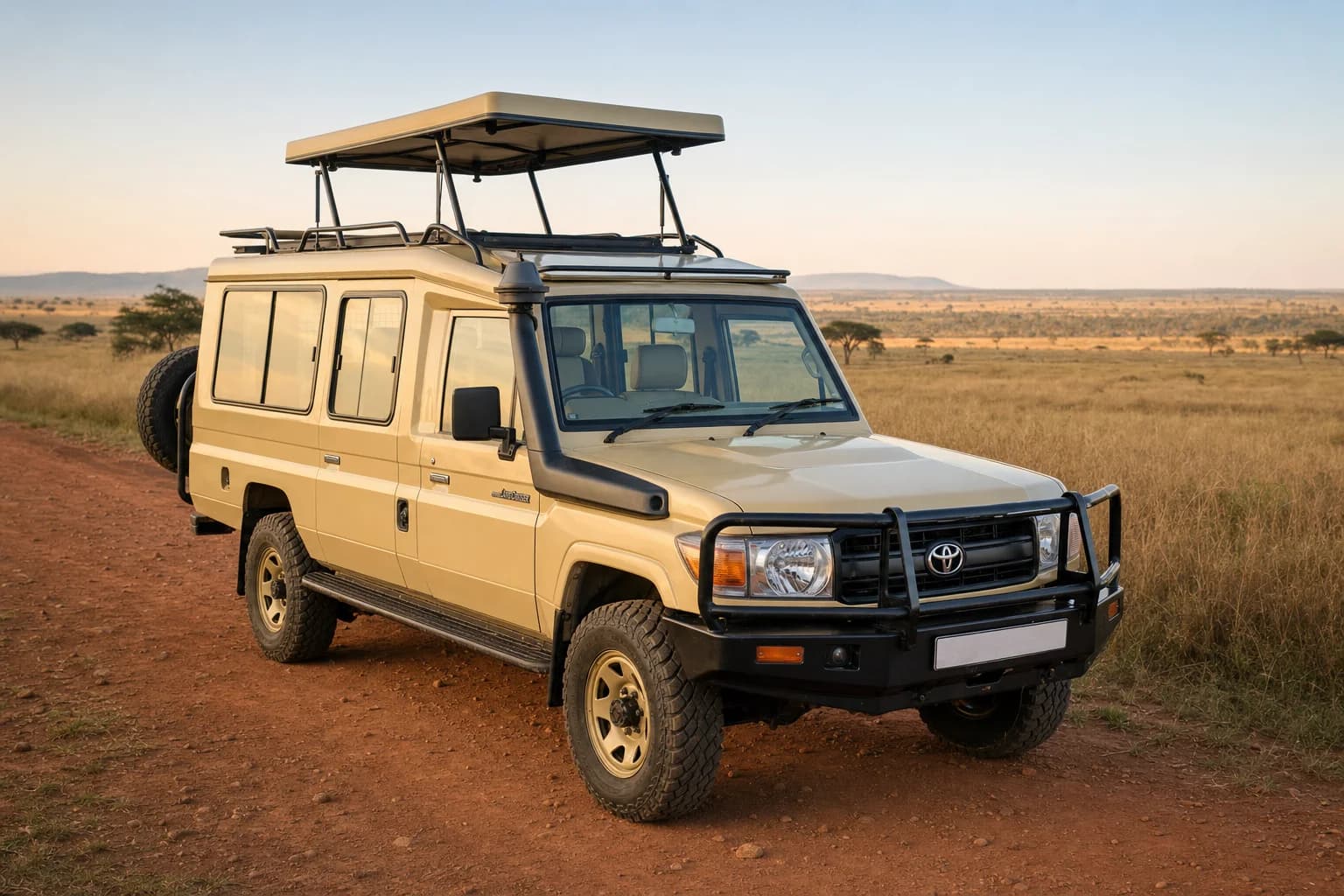
How to choose a Tanzania safari vehicle with a local driver
A Tanzania journey is shaped by the roads, group size, luggage and the driver’s responsibilities—not by the vehicle name alone. Use this guide to compare the complete vehicle-and-driver arrangement before requesting a quote.
SafariHub is in public beta. Any preview vehicles, drivers, prices or availability shown on the site are examples until confirmed for a specific request.
Map the route and actual road surfaces
Write the journey as a sequence from pickup to final drop-off. A destination name alone cannot show whether the trip uses paved highways, gravel approaches, park roads or seasonal sections. Confirm current conditions for important segments near the travel date, because access and journey times may change.
- Pickup, overnight stops and final drop-off
- Paved, gravel, park or seasonal roads
- Approximate driving time for each day
- Border crossings, ferries or remote sections
Count people, seats and luggage separately
A maximum seat count does not describe usable comfort. Share the number of adults and children, the size of every bag and any specialist equipment. Ask how luggage will be stored and whether the stated capacity assumes soft-sided bags, especially when the same vehicle will be used for several long days.
- Adults, children and required child seats
- Large bags, carry-ons and equipment cases
- Mobility or access requirements
- Window-position needs for wildlife viewing
Confirm the exact proposed vehicle
A vehicle category or promotional photo cannot confirm the features of the vehicle that will arrive. Ask when the exact vehicle will be identified and which details can be confirmed for it. Treat preview photos, ratings and specifications as examples until they are tied to the proposed arrangement.
- Seating layout and working seat belts
- Ventilation, air conditioning and charging points
- Viewing-roof configuration where relevant
- Spare wheel, recovery equipment and luggage storage
- Recent photos or a responsibly verifiable readiness check
Define the local driver’s role
“Vehicle with driver” can describe a transfer, a multi-day driving service or a driver-guide arrangement. Ask the provider to describe the role in writing. Do not assume that transportation, guiding, itinerary planning, translation and on-trip support are automatically included in the same service. Confirm every part for the proposed route.
- Transfer driver, safari driver or driver-guide
- Working languages and relevant route experience
- Pickup and route-change responsibilities
- Rest periods and overnight arrangements
- Contact process if plans or the vehicle change
Compare full inclusions and exclusions
Headline daily figures are not comparable unless they use the same assumptions. Request a written list showing what is included, excluded or subject to change for the proposed route. This makes it easier to understand the complete arrangement without assuming that an unlisted item is covered.
- Vehicle, driver, fuel, distance or hour limits
- Pickup and waiting-time terms
- Park, toll, ferry or border charges
- Driver accommodation and meals
- Change, cancellation and support procedures
Use a checklist before requesting a quote
Turn the route into a short written brief before contacting a provider. The brief should make the difficult road segments, space needs and expected driver support visible. If a detail cannot be confirmed immediately, ask when it will be confirmed and ensure that it appears in the written quote.
- What roads and seasonal conditions are expected?
- Will every traveler and bag fit comfortably?
- Which features belong to the exact proposed vehicle?
- What will the driver actually coordinate?
- What is included, excluded or subject to change?
Continue planning
Turn the route and vehicle questions into a written quote that can be compared line by line.
Evidence and freshness
Official planning sources
These guides use stable planning principles and link to official Tanzania sources for destination, park and provider information.
Sources reviewed:
- Tanzania Tourist Board — Plan Your Trip
- Tanzania National Parks — Game Drives
- Tanzania Tourist Board — Tourism Service Providers
Park access, fees, weather, regulations and provider details can change. Recheck the relevant authority and the written quote close to travel.
Planning a route through Tanzania?
Share your destinations, travel dates, group size and luggage needs so you can compare the right questions for your journey.
Open the five-question checklist
Continue with the JRO to Arusha pickup and driver quote checklist