A vehicle suited to the journey
Passenger and luggage space, road conditions, viewing needs and the exact proposed vehicle should be considered together.
About SafariHub
SafariHub helps travelers consider the vehicle, professional driver or driver-guide, route and practical trip details together instead of treating transport as a separate handoff.
SafariHub is not self-drive, peer-to-peer vehicle sharing or an anonymous marketplace. Travelers plan a vehicle with a professional driver or driver-guide.
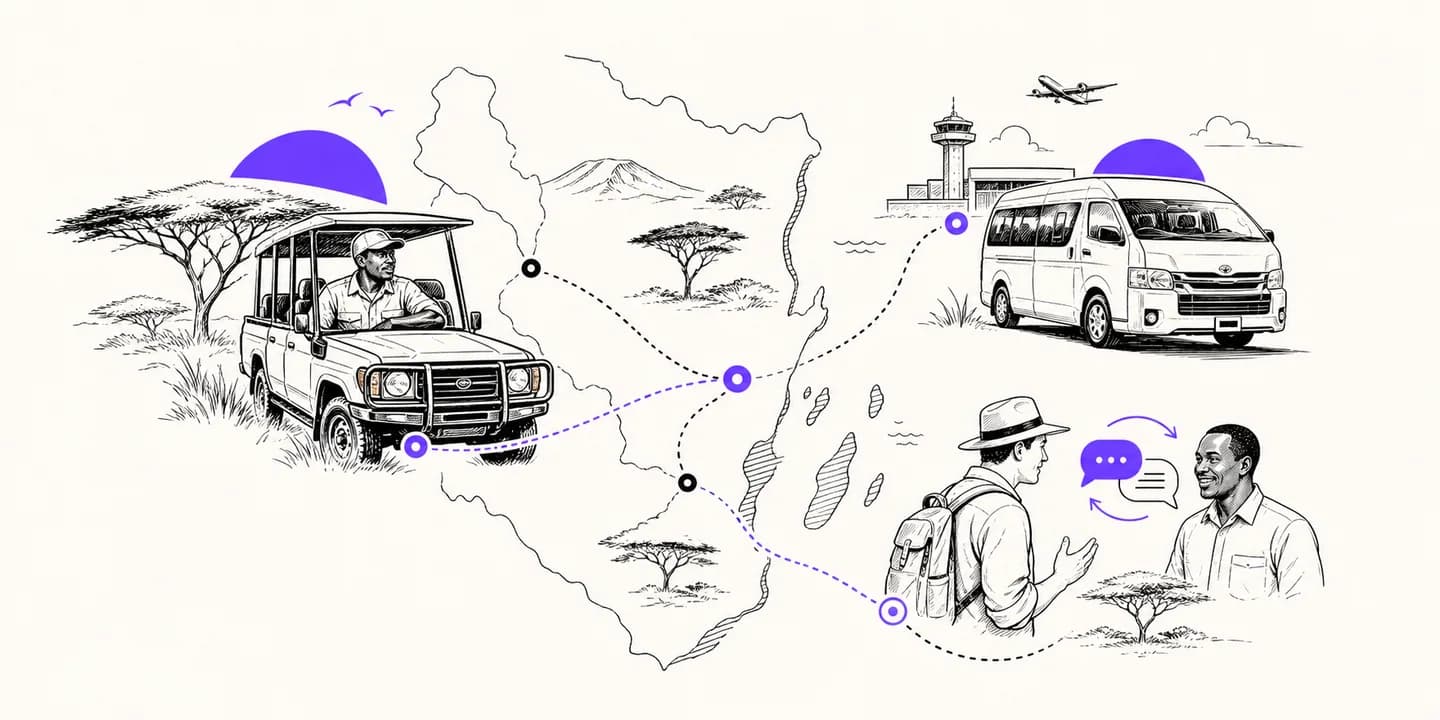
A vehicle alone does not define a guided trip. SafariHub organizes the questions that connect the people, equipment and route.
Passenger and luggage space, road conditions, viewing needs and the exact proposed vehicle should be considered together.
The written plan should make the driving, guiding, language and on-route support role clear.
Arrival points, park or accommodation handoffs, timings, inclusions and change terms shape the service.
SafariHub supports questions across connected East Africa travel stages without claiming that every route or service is automatically available.
Journey 1
Plan the meeting point, luggage, connection time and how the first driver handoff reaches the next stop.
Journey 2
Consider the vehicle setup, driver-guide role, daily route and park or accommodation transitions.
Journey 3
Keep passenger comfort, baggage, driving sequence, overnight stops and change terms in one brief.
SafariHub provides a shared planning context. Request-specific service still moves forward through clear written details.
The public site helps travelers ask better questions. It does not replace a written service agreement for a specific trip.
Travelers do not collect a vehicle to drive themselves; the professional driving role is part of the service.
Vehicle and driver-guide responsibilities should be understood together rather than reduced to an unverified listing.
Routes, road conditions, pricing, assigned people and actual availability can change and must be confirmed for the request.
Use the planning path that matches the question you are trying to answer.